This Social Worker Runs Jesus Coffee
I have been in the embroidery game long enough to know which designs are destined for the sample pile and which ones are going straight to production. When I first came across the This Social Worker Runs Jesus Coffee design, I immediately recognized the market. It speaks to a specific, dedicated audience: the faith-driven, the caffeine-fueled, and the compassion-fatigued. It is a niche that blends vocation, vice, and virtue. Let's break down how this graphic performs when it moves from a digital file to a stitched reality.
First Impressions and Visual Personality
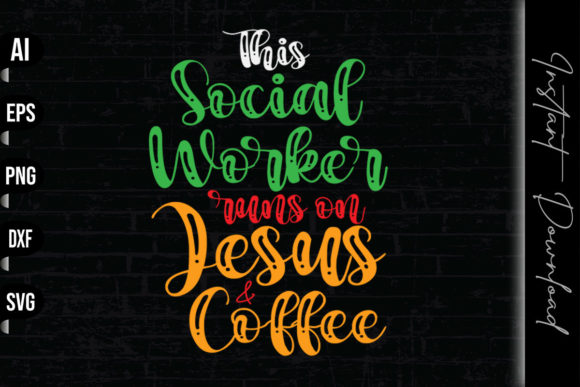
The design leans heavily into a modern rustic or hand-lettered aesthetic. This is a smart move. It feels personal, not corporate. The phrase itself has a rhythm: This Social Worker Runs (the grind) On Jesus (the faith) Coffee (the fuel). For an embroidery project, the layout is crucial. If the text is stacked, it must be sized appropriately for a chest or a tote bag. The mood is gritty grace. It acknowledges the hard work of social work while grounding it in faith and a little self-deprecating humor about coffee dependency. This is not a polished, sterile Graphics file—it has personality.
As a Print Templates and Graphics product, it offers flexibility. But for machine embroidery, we need to think about stitchability. Hand-lettered fonts often have thin strokes and tight curves. Those can be tricky. A skilled digitizer will need to convert those delicate lines into clean satin or fill stitches without losing the organic feel. The detail level is moderate, which is good, but it demands respect during the digitizing process.
Real-World Scenario: The Custom Sweatshirt
A client, let's call her Sarah, is a school social worker. She wants a high-quality embroidered sweatshirt for a team retreat. She provides the This Social Worker Runs Jesus Coffee design. My first step is always the blank. A tri-blend garment is soft, but too much stretch can warp a dense design. A heavyweight 80/20 cotton-poly sweatshirt is a safer bet. It provides a stable canvas for the embroidery project.
Hoop size is the next hurdle. A 5x7 or 6x10 hoop is almost mandatory to capture the full phrase without shrinking the text to an illegible size. I would recommend a chest placement, roughly four to five inches wide. The stitch density needs to be balanced. Too dense, and the sweatshirt puckers. Too light, and the Jesus Coffee part might look like an afterthought. I would test a satin stitch for the main text and a subtle fill stitch for any accent elements. The thread colors matter. A cream thread on a heather grey sweatshirt gives a warm, coffee-shop vibe. A bright white or gold thread on a navy or burgundy base makes a statement. This custom apparel piece becomes a conversation starter.
Performance Across Products: From Totes to Patches
Tote Bags: This is a natural fit. A 10-ounce canvas tote is a billboard for this design. The thick fabric handles the stitch density well. It makes for a great fundraising item or a conference giveaway. The tote bag design feels sturdy and purposeful.
Embroidered Patches: This design has excellent patch potential. A social worker can sew an embroidered patch onto a backpack or a work bag. Keeping the detail level moderate ensures the patch does not become a stiff, unsewable brick. It adds a layer of handmade authenticity to a utilitarian item.
Caps: This is a tough application. The curved surface of a cap limits space. You would likely need to abbreviate or drastically reduce the font size, which might hurt readability. I would advise against it unless you are using a flat snack cap or a large front panel. The curvature can distort the hand-lettered look.
Digital Products: Since it sits in the Print Templates category, it works perfectly for print-on-demand mockups. An Etsy seller can list this on a mug, a t-shirt, or a phone case instantly. The design assets are ready for that. The transition from printable mockup to physical product is seamless.
Technical Embroidery Checks and Balances
Stitch Density: Always check the machine embroidery design file. High density on a design this size can lead to a board-like feel, especially on a t-shirt. Use a quality cutaway stabilizer to support the stitches. A running stitch for outlines and a satin stitch for the main text is a reliable combination.
Detail and Size: The smallest details in the hand-lettering will determine the minimum embroidery size. Pushing a ten-letter word into a two-inch space is a recipe for thread breaks and a muddy design. Always test the stitch-out at your target size on a scrap piece of fabric. This is standard practice for any commercial embroidery job.
Color Contrast: This is non-negotiable. The phrase needs to pop. If the design relies on a single color thread, make sure it contrasts sharply with the fabric texture. Dark brown thread on a light cream shirt gives a warm, coffee-shop aesthetic. Black thread on a bright red shirt grabs attention. If you are working with dark fabric, consider using a white or metallic underlay.
Licensing: As a commercial designer, I always check the license. If you are an Etsy seller or a small shop product creator, ensure the Print Templates license allows you to use the design on finished goods for sale. Respect the creator's terms. It protects your business and theirs. Some files are for personal use only, so verify before you start selling.
Where to Use This Design Carefully
Baby and Toddler Apparel: The full phrase is too long for a standard 4x4 hoop. It would be too small to read. Avoid it for baby embroidery unless you are using a larger machine and a larger hoop.
Lightweight Knits: A thin, flimsy t-shirt will not support the weight of a dense embroidery design without puckering. Use a heavy stabilizer or a quality blank. A sweatshirt embroidery project is a much safer bet.
Dark Fabric, Dark Thread: If you stitch this in black thread on a black shirt, it is a secret message. Make sure your customers know what they are getting. Visibility is key for a text-heavy design.
High Texture Fabrics: Fleece, terry cloth, or thick chenille will swallow the details of the hand-lettering. Stick to smooth, woven fabrics or tightly knit fleece. The fabric texture directly impacts the clarity of the stitch.
The Verdict for Creatives and Small Shops
This Social Worker Runs Jesus Coffee is a solid, niche graphic that resonates with a specific audience. It works well as a Graphics product for digital mockups and as a physical embroidery project for apparel and accessories. It bridges the gap between a handmade product and a personalized gift.
Tips for Etsy Sellers: Create a mockup on a distressed denim jacket or a cozy hoodie. Target keywords like social worker gift, faith-based apparel, and Christian coffee lover. Offer it as a personalized gift option. The craft business potential is strong if you execute it cleanly.
Tips for Apparel Decorators: Always test the digital embroidery file before running a batch. Confirm the hoop size needed. Check the thread colors against the fabric texture. Use a proper stabilizer to prevent puckering. This design looks best on mid-to-heavyweight fabrics.
Final Stitch: My advice is simple. Test the stitch-out. Validate the size. Check the licensing. If you do it right, this design will feel like a warm cup of coffee for a tired soul—comforting, energizing, and perfectly timed. It turns a clever phrase into a tangible, meaningful finished product that builds customer trust and brand consistency.